Pathogenesis

1. Conformational change
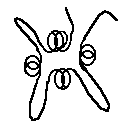
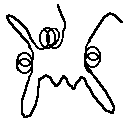
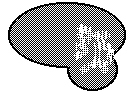
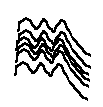
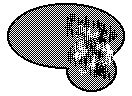
PrPc PrPsc
The key pathological process is the conversion of normal cellular prion protein (PrPc) to another protein molecule with the same amino acid sequence but an abnormal conformation such as is found in scrapie (PrPsc).

Normal PrPc consists mainly of alpha helices, whereas PrPsc contains beta sheets.

2. Neuronal degeneration

The PrPsc is resistant to most proteases and builds up, leading to neuronal death and microscopically visible spongiform changes in the brain.

3. Amyloid deposition

In some, but not all, forms of prion disease amyloid plaques are formed, consisting of indigestible remnants of PrPsc.

In some forms of prion disease neurofibrillary tangles also occur.